Subscribe to AI newsletter
Your data is completely secure with us. We don't share it with anyone.
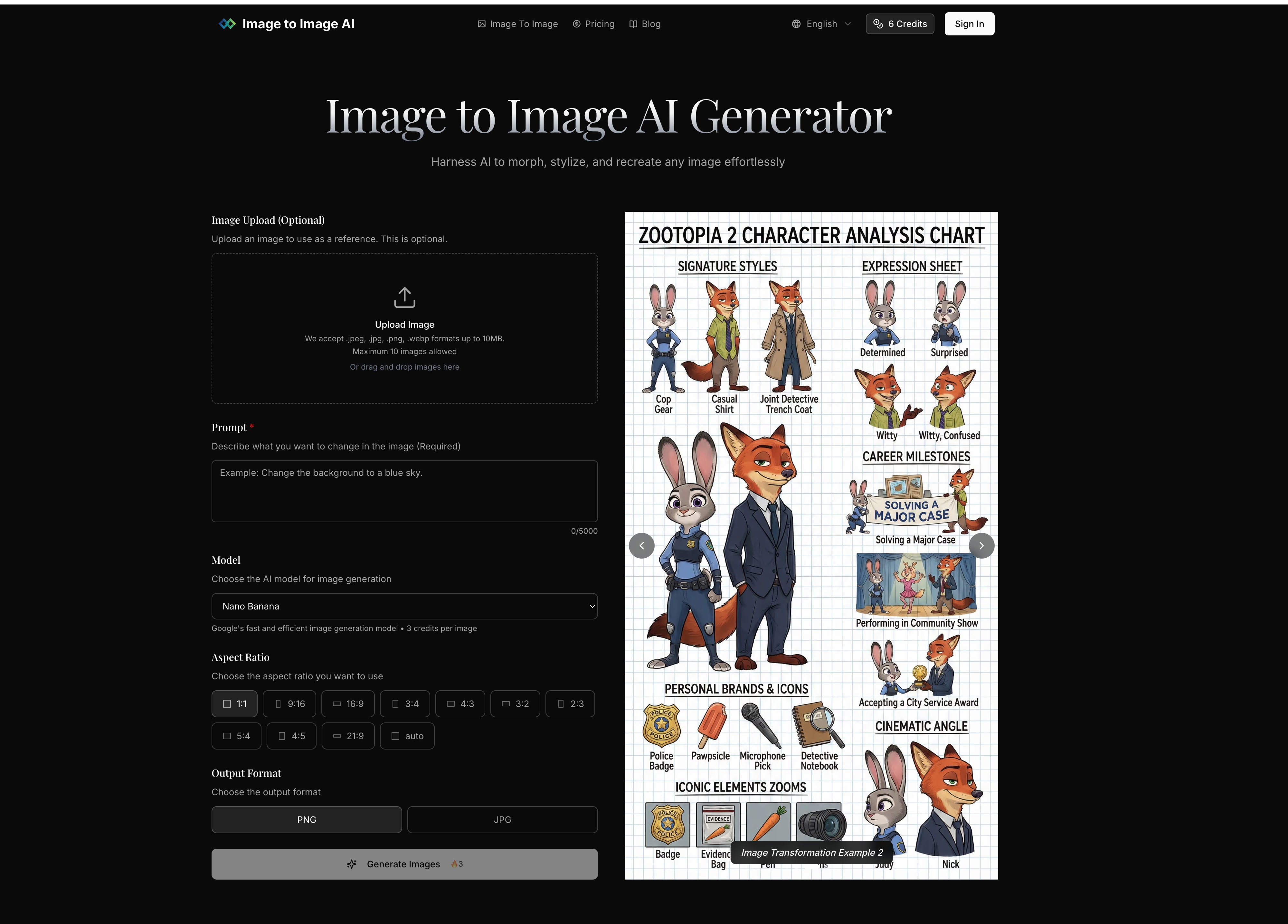
Select an image from your device to use as the starting point. For best results, use clear images with good lighting and resolution that match your desired output aspect ratio.
Write a prompt describing how you want to transform the image. Be specific about style, colors, modifications, or artistic effects you want to apply.
Fine-tune transformation parameters like aspect ratio, output count, and transformation strength to control how closely the result resembles your original image.
Click generate and watch as AI transforms your image. Browse the results, select your favorites, and download high-quality versions ready for use.
From a usability and workflow perspective, Image to Image AI demonstrates how a well-designed AI tool can significantly simplify and enhance modern Image Generation tasks. Its step-by-step “How to Use” process is intuitive, structured, and accessible, making advanced image editing and transformation available to both beginners and professionals without requiring traditional design expertise.
The first step—uploading a photo—sets a practical foundation for the entire workflow. By allowing users to start with an existing image, this AI tool ensures that the original structure, composition, and subject matter are preserved. This is particularly important in Image Generation scenarios where consistency and visual identity matter, such as product photos, portraits, or brand assets. The recommendation to use high-quality images also highlights the system’s focus on achieving optimal output results.
The second step introduces prompt-based control, which is one of the most powerful aspects of Image to Image AI. Users can describe exactly how they want to transform their image, including style changes, color adjustments, environmental modifications, or artistic effects. This natural language interface removes the complexity of manual editing tools and replaces it with an intuitive creative direction system. As an AI tool, it effectively translates human intent into visual output, making Image Generation more expressive and flexible.
In the third step, users are given advanced control through adjustable settings such as transformation strength, aspect ratio, and output quantity. This level of customization is essential because it allows users to decide how closely the final image should resemble the original. Whether the goal is a subtle enhancement or a dramatic artistic reinterpretation, this flexibility ensures that the tool can support a wide range of creative needs. It also adds a professional layer to the workflow, making it suitable for commercial and marketing use.
The final step—generation and download—highlights the efficiency of the system. With just one click, users can produce multiple high-quality variations in a short amount of time. This rapid output capability is a major advantage in modern Image Generation workflows, where speed and iteration are critical. Users can quickly review results, select preferred versions, and download them in high resolution for immediate use.
Overall, the structured workflow of Image to Image AI reflects the strengths of a modern AI tool that prioritizes simplicity, flexibility, and performance. By combining intuitive controls with powerful transformation capabilities, it significantly enhances the Image Generation process and empowers users to create professional-quality visuals with ease.

This comprehensive guide explores the best AI image generators available in 2026, highlighting their unique features, strengths, and ideal use cases. We'll dive deep into each tool's capabilities to help you identify which AI image generator best suits your creative needs.
Google has just launched a powerful AI IDE code editor — now you can really vibe while coding
The best AI Model And AI Tools in 2026,The Most Popular Free AI Model And AI Tools.