Subscribe to AI newsletter
Your data is completely secure with us. We don't share it with anyone.
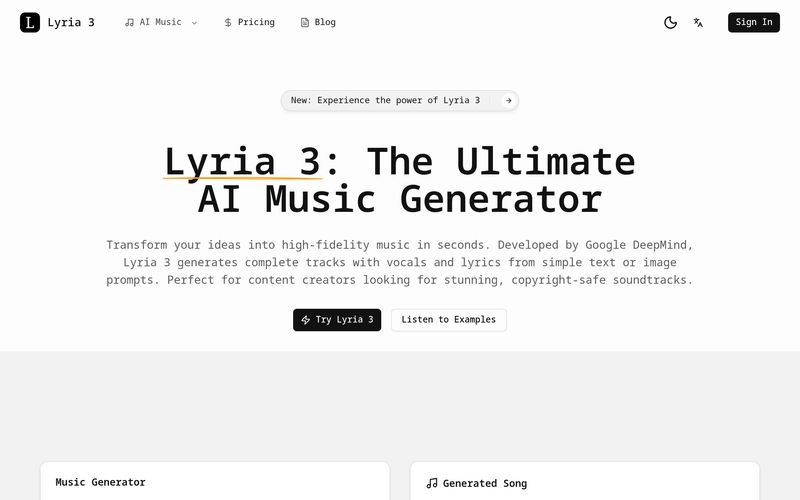
As short-form video content, digital storytelling, and creator-driven media continue to grow, the demand for fast, affordable, and professional-quality music production has never been higher. However, traditional music creation often requires technical expertise, expensive software, or time-consuming searches through stock audio libraries. This is where Lyria 3 emerges as a breakthrough AI tool in the Music Generation space. Developed by Google DeepMind, Lyria 3 transforms simple text prompts, images, or video inspirations into complete, high-fidelity music tracks with vocals and lyrics in just seconds, making professional audio creation accessible to creators of all skill levels.
One of the biggest strengths of Lyria 3 as an AI tool is its remarkably low barrier to entry. Unlike traditional music production workflows that require knowledge of instruments, composition, or digital audio workstations such as Logic Pro, Lyria 3 allows users to simply describe a mood, genre, or creative idea using natural language. Whether someone wants an emotional piano ballad, cinematic orchestral soundtrack, upbeat pop music, lo-fi beats, or even heavy rock, the system automatically handles composition, instrumentation, vocals, and lyric generation. This simplicity makes Lyria 3 an ideal Music Generation solution for YouTubers, marketers, social media creators, indie filmmakers, and entrepreneurs.
What truly separates Lyria 3 from many competing music platforms is its ability to generate complete songs, not just instrumental loops. The model automatically creates human-like vocals, contextually relevant lyrics, chord progressions, and instrumental arrangements, delivering cohesive and polished tracks that sound professionally produced. Instead of spending hours sourcing royalty-free music or hiring composers, creators can instantly generate custom soundtracks tailored to their exact vision.
Another standout feature of Lyria 3 is its innovative multimodal “image-to-music” capability. Rather than relying solely on text prompts, users can upload an image or video clip, allowing the AI to analyze visual mood and compose a soundtrack that matches the atmosphere perfectly. For example, a peaceful forest scene could inspire calm ambient music, while a bustling city image might generate energetic electronic beats. This makes Lyria 3 an especially valuable AI tool for content creators seeking highly synchronized audiovisual storytelling.
Audio quality is another area where Lyria 3 excels in the Music Generation industry. The platform produces 48kHz, 16-bit PCM stereo output, delivering studio-quality sound suitable for professional video editing, social content, advertisements, and branded media. Additionally, its multilingual capabilities allow the AI to sing naturally in languages including English, Spanish, Japanese, Korean, French, German, Portuguese, Hindi, and more, making it highly adaptable for global audiences.
For creators concerned about copyright, Lyria 3 introduces an extra layer of trust through SynthID watermarking, helping identify AI-generated content transparently while avoiding unauthorized imitation of real-world artists’ voices. Combined with support for custom lyric input, vocal style customization, and copyright-conscious generation, the platform feels highly practical for commercial use.
Overall, Lyria 3 stands out as a cutting-edge AI tool in the Music Generation category. With multimodal creativity, studio-quality audio, automatic vocals and lyrics, multilingual support, and a beginner-friendly workflow, Lyria 3 offers an exciting new way for creators to produce unique, high-quality soundtracks without traditional production barriers.
As AI-powered creativity continues to reshape the digital content industry, finding an efficient AI tool for professional Music Generation has become increasingly valuable for creators, marketers, filmmakers, and social media professionals. Traditional music production often requires expensive software, technical knowledge, licensing concerns, and significant time investment. This is where Lyria 3, developed by Google DeepMind, stands out as a groundbreaking solution. By transforming simple prompts into complete, studio-quality songs with vocals and lyrics, Lyria 3 lowers the barrier to music creation and makes high-quality audio production accessible to virtually anyone.
One of the biggest strengths of Lyria 3 as an AI tool is its ability to generate complete musical tracks, not just instrumental loops or unfinished beats. Unlike many traditional Music Generation platforms that focus solely on background melodies, Lyria 3 automatically composes instrumental arrangements, generates contextually relevant lyrics, and even produces realistic, human-like vocals in seconds. Whether users need upbeat pop music, cinematic orchestral soundtracks, lo-fi beats, energetic rock anthems, or relaxing ambient tracks, the platform adapts to different genres effortlessly. This versatility makes Lyria 3 especially appealing for YouTubers, TikTok creators, podcasters, indie filmmakers, and content marketers who constantly need fresh and unique music.
Another impressive aspect of Lyria 3 is its accessibility. Users do not need prior musical training, knowledge of instruments, or experience with complex digital audio workstations. Instead, creators simply describe a mood, genre, or creative direction in natural language, and the AI tool handles the composition process automatically. This democratization of Music Generation opens new possibilities for beginners, entrepreneurs, and creators who previously found music production intimidating or expensive.
A standout innovation that makes Lyria 3 unique is its multimodal “image-to-music” feature. Instead of relying solely on text prompts, users can upload an image or short video clip, allowing the AI to interpret visual mood and generate a soundtrack that matches the atmosphere. A calm landscape may inspire peaceful ambient sounds, while energetic urban scenes can produce high-tempo electronic music. This functionality makes Lyria 3 particularly powerful for creators seeking stronger emotional synchronization between visuals and audio.
The platform also excels in audio quality, delivering 48kHz, 16-bit PCM stereo output, which creates a polished, professional listening experience suitable for commercial content, advertisements, social videos, and branded campaigns. Furthermore, Lyria 3 supports multilingual lyric and vocal generation, including English, Spanish, Japanese, Korean, French, German, Hindi, Portuguese, and more, making it ideal for global audiences and localized content creation.
For creators concerned about copyright safety, Lyria 3 introduces an added layer of reliability through SynthID watermarking, helping identify AI-generated content transparently while avoiding imitation of specific real-world artists’ voices. Combined with support for custom lyrics and vocal style customization, the platform feels highly practical for commercial projects.
Overall, Lyria 3 establishes itself as an advanced and creator-friendly AI tool for modern Music Generation. With fast creation speeds, complete song production, multimodal inspiration, multilingual support, and studio-grade audio quality, Lyria 3 offers a compelling solution for anyone looking to create unique, professional soundtracks without the traditional barriers of music production.


This comprehensive guide explores the best AI image generators available in 2026, highlighting their unique features, strengths, and ideal use cases. We'll dive deep into each tool's capabilities to help you identify which AI image generator best suits your creative needs.
Google has just launched a powerful AI IDE code editor — now you can really vibe while coding
The best AI Model And AI Tools in 2026,The Most Popular Free AI Model And AI Tools.