Subscribe to AI newsletter
Your data is completely secure with us. We don't share it with anyone.
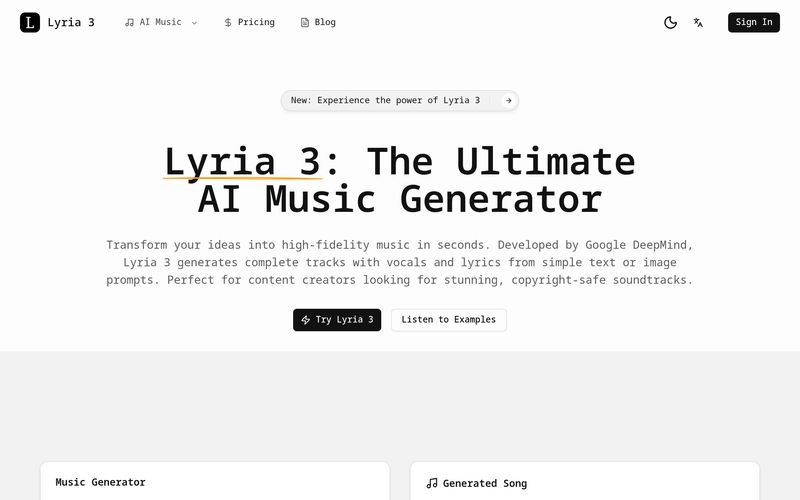
Lyria 3 is Google DeepMind's most advanced AI music and vocal generation model. It is designed to lower the barrier to music creation, allowing anyone to generate high-fidelity, complete musical tracks with vocals and lyrics using simple text or image prompts.
Absolutely not! Lyria 3 is built specifically to democratize music creation. You don't need to know how to play an instrument or use complex DAW software. Just describe the mood, genre, and topic you want, and the AI handles the composition, instrumentation, and singing automatically.
Yes. Lyria 3 generates original compositions and incorporates an imperceptible SynthID watermark to identify AI content transparently. Furthermore, the model is designed to refuse requests that attempt to mimic the voices of specific real-world artists, making it a safe and reliable source for your background music needs.
It generates everything! One of the biggest breakthroughs of Lyria 3 is its ability to automatically generate high-quality, human-sounding vocals along with contextually appropriate lyrics, seamlessly integrated into complex instrumental arrangements.
Yes, you can input your own custom lyrics, and Lyria 3 will vocalize them according to the musical genre and vocal style you specify in your prompt.
Lyria 3 possesses powerful multimodal capabilities. Instead of typing a description, you can upload an image (like a bustling city street or a quiet forest), and the AI will analyze the visual mood and compose a soundtrack that perfectly complements it.
Currently, Lyria 3 generates high-fidelity audio clips that are typically around 30 seconds long. These are perfect for short-form video content like YouTube Shorts, TikToks, and Instagram Reels.
Lyria 3 is multilingual. It can generate lyrics and sing naturally in multiple languages, including English, Spanish, French, German, Japanese, Korean, Hindi, and Portuguese.
As the creator economy continues to expand, more people are searching for an accessible AI tool that can simplify professional Music Generation without requiring years of musical training or expensive production software. Lyria 3, developed by Google DeepMind, represents one of the most exciting breakthroughs in AI-powered audio creation by making it possible for anyone to generate complete, high-quality music tracks using simple text or image prompts. Whether users are content creators, marketers, video editors, or independent musicians, Lyria 3 offers an efficient and beginner-friendly way to create original soundtracks with surprisingly professional results.
One of the biggest advantages of Lyria 3 as an AI tool is its accessibility. Traditional music production often requires knowledge of instruments, sound engineering, mixing software, or complex digital audio workstations. However, Lyria 3 removes these barriers entirely. Users do not need any musical background to start creating. Instead, they simply describe the desired mood, genre, or theme in plain language, and the platform automatically handles the composition process. From instrumentation and melody creation to singing and lyrical structure, the AI performs tasks that would traditionally require an entire production team. This democratization of Music Generation is especially valuable for creators who want quality audio but lack technical expertise.
Another standout feature is the model’s ability to generate complete songs, not just instrumental loops. Unlike many traditional Music Generation platforms that focus mainly on background music, Lyria 3 produces human-like vocals, contextually relevant lyrics, and rich instrumental arrangements simultaneously. This means creators can generate fully realized tracks for podcasts, marketing videos, social media campaigns, or entertainment content within minutes. Even better, users can input their own custom lyrics, giving creators more control over storytelling, branding, or messaging while still benefiting from automated music production.
One particularly innovative capability that makes Lyria 3 unique in the AI tool landscape is its image-to-music functionality. Instead of only relying on text prompts, users can upload an image, such as a quiet forest, vibrant city street, or cinematic scene, and allow the AI to analyze visual mood before composing matching audio. This multimodal approach strengthens the emotional connection between visuals and sound, making it highly effective for short-form content on platforms like YouTube Shorts, TikTok, and Instagram Reels.
For creators worried about copyright safety, Lyria 3 provides reassurance through SynthID watermarking, helping transparently identify AI-generated content while refusing requests that attempt to imitate real-world artists’ voices. This makes the platform a safer alternative to traditional copyrighted music sources. Additionally, the model supports multilingual vocal generation, allowing songs to be naturally performed in languages such as English, Spanish, French, German, Japanese, Korean, Hindi, and Portuguese, greatly expanding creative possibilities for global audiences.
Although generated clips are currently around 30 seconds long, this format is highly practical for modern short-form video production and social media marketing. Overall, Lyria 3 establishes itself as a highly capable AI tool in the Music Generation industry, offering a combination of accessibility, creative flexibility, copyright-conscious design, multilingual support, and professional-quality results that empower creators to produce unique music faster than ever before.


This comprehensive guide explores the best AI image generators available in 2026, highlighting their unique features, strengths, and ideal use cases. We'll dive deep into each tool's capabilities to help you identify which AI image generator best suits your creative needs.
Google has just launched a powerful AI IDE code editor — now you can really vibe while coding
The best AI Model And AI Tools in 2026,The Most Popular Free AI Model And AI Tools.