Subscribe to AI newsletter
Your data is completely secure with us. We don't share it with anyone.
While FLUX.1 has many advantages, it also has some drawbacks. Some visual scenes can be complex, and they may struggle with very specific requests.
FLUX.1 dev is a model designed for non-commercial use, featuring open weights and guidance-based training.
The model is designed for the creative and digital content sectors.
FLUX.1 schnell: Similar to FLUX.1 dev, you can access weights on Hugging Face and the inference code on GitHub.
FLUX.1 schnell: FLUX Schnell creates images about 10 times quicker than the Pro version. FLUX.1 dev: FLUX Dev is designed for developers, offering advanced options like image-to-image generation. FLUX.1 pro: FLUX Pro is the strongest version with 12 billion parameters and is not open-source.
The FLUX.1 text-to-image model serves as a solid foundation for future text-to-video systems.
The introduction of FLUX.1 puts pressure on established competitors like MidJourney and establishes new benchmarks in AI image creation, likely to greatly influence the creative and digital content sectors.
FLUX.1 stands out as a versatile AI tool for Image Generation, offering a range of models—Pro, Dev, and Schnell—that cater to diverse creative and professional needs. Each model has distinct strengths: FLUX.1 Pro delivers the highest fidelity and detail with 12 billion parameters, making it ideal for professional digital content creation. FLUX.1 Dev is tailored for developers and non-commercial projects, offering open weights and guidance-based training for flexible experimentation, including image-to-image generation. FLUX.1 Schnell emphasizes speed, generating images roughly ten times faster than the Pro version, which is particularly useful for rapid prototyping or iterative creative workflows.
While FLUX.1 excels in producing high-quality images, it does have technical considerations. Extremely complex visual scenes or highly specific prompts may challenge the AI, occasionally resulting in outputs that require refinement. Despite these limitations, FLUX.1 remains a powerful AI tool that simplifies image creation, allowing users to generate detailed, stylized, or photorealistic visuals without extensive technical expertise.
FLUX.1 is also accessible to the developer and open-source community. The Schnell and Dev models provide open weights and inference code via GitHub and Hugging Face, encouraging collaboration and innovation. This transparency allows developers and artists to integrate FLUX.1 into their workflows, experiment with modifications, or use it as a foundation for custom projects.
Looking forward, FLUX.1 serves as a robust platform for future developments, particularly in text-to-video systems, expanding its role in multimedia content creation. Its combination of quality, speed, and flexibility establishes new standards for AI-driven image generation, positioning it as a benchmark for competitors like MidJourney and setting the stage for transformative impacts in advertising, digital content, social media, and entertainment industries. Overall, FLUX.1 reinforces the growing importance of AI tools in creative workflows, enabling faster, more efficient, and higher-quality visual content production.


This comprehensive guide explores the best AI image generators available in 2026, highlighting their unique features, strengths, and ideal use cases. We'll dive deep into each tool's capabilities to help you identify which AI image generator best suits your creative needs.
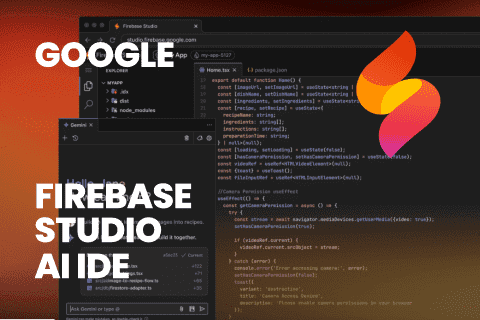
Google has just launched a powerful AI IDE code editor — now you can really vibe while coding
The best AI Model And AI Tools in 2026,The Most Popular Free AI Model And AI Tools.